SEO for Clothing Stores
The clothing store competes in the search not only for the general query “buy clothes”. Buyers are looking for a specific type of thing, material, style, brand or season. SEO helps to link this demand with a catalogue that can really satisfy the choice. We check the structure of categories, the availability of goods for search engines, the work of filters and the content of cards. Priority is given to directions with the desired assortment.
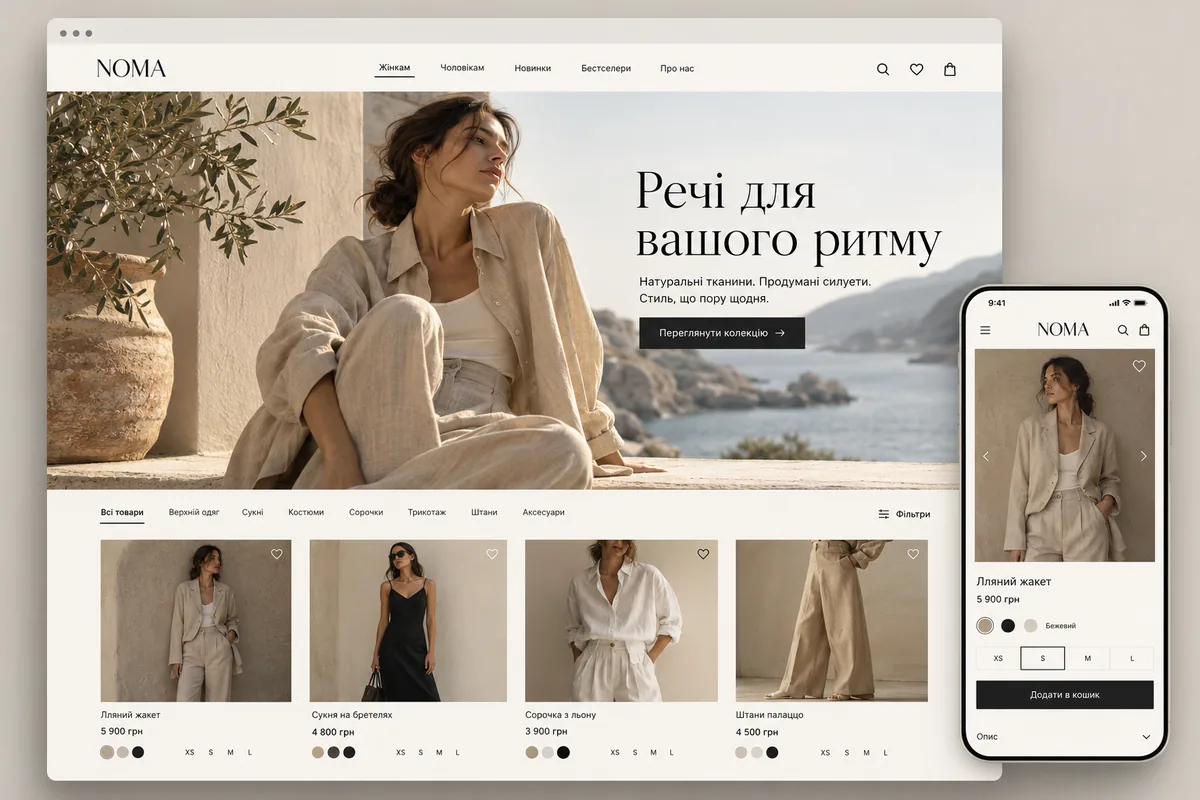
- 01
Categories for real choice
We connect search demand with your available clothing range, using useful categories and collections and grouping closely related searches on one relevant page.
- 02
Control of duplicates and filters
Check the sorting addresses, parameters and options. Search engines should have a catalogue available without excessive multiplication of the same content.
- 03
Evaluation through sales
We analyze organic transitions, purchases and availability of sizes. Separate seasonal fluctuations and lack of goods from the problems of the pages themselves.
What queries should be associated with categories
First, we study the range and business priorities: which categories have sufficient choice, stable balances and acceptable margins. Then we check the demand and search results. The words "buy", "price" and "order" do not require three different pages of the same type of clothing. Usually these are options for the intention to purchase the same product, which should be covered by one strong category.
Below are examples, not a proven frequency. For each future selection, we estimate whether there are enough products and content. The page "Low-cut women's shirts" can be useful for the appropriate range. If there is one temporary model, a separate empty category is unlikely to help the buyer.
| Example of request | Natural Page | What Makes It Useful |
|---|---|---|
| Women's linen shirts | A category or an agreed collection | Model selection, composition, sizes and photos |
| Dress of a specific model | Product page | Exact name, options and availability |
| Winter jackets of a certain brand | Brand subcategory for a sufficient choice | Actual range and clear filters |
| How to choose the size of jeans | Information material | Explanations of measurements and transitions to the catalogue |
Filters can create thousands of unnecessary addresses
Color, size, price and sorting give many combinations. Not all of them are needed in the index. Check what addresses are already available for search contained in the site map and how the main versions of pages are defined. We make decisions for indexing useful selections and managing service parameters after analyzing a specific store, rather than one rule for the entire catalogue.
In parallel, we check the usual links between categories and products, pagination and loading. If the thing can be found only through internal search, the robot may not pass to it in the same way. A convenient buyer interface should be combined with an available navigation structure. All changes are checked by examples of addresses for mass implementation.
- Type of clothingThe main category of choice
- A useful selectionMaterial, style or brand as needed
- Model CardThe exact thing and its characteristics
- VariantsDimensions, colors and residues
- Buying guidanceAnswers before you get started
- PurchaseRegistration and verification of the result
How we handle sizes, colours and out-of-stock products
One model can have many options, but this does not mean that all addresses must compete with each other. We agree on the way of presenting the product, the main URLs and the compliance of the price and balance of the selected option. Structured data is added according to the actual catalogue model. They help to transfer the content of product information, but do not guarantee a special look of the result in Google.
For temporarily absent sizes, we show the correct status and available alternatives. After completing the collection, we decide the fate of pages by their usefulness, demand and the presence of a suitable replacement. We do not automatically redirect all old products to the main one: the visitor who was looking for a specific thing should get a clear answer.
How to replace long texts under the catalogue
Useful content begins with product data: fabrics, planting, measurements, photo details and purchase conditions. For the category, we explain the differences between models and selection criteria without repeating general statements about modern fashion. The placement of the text should not interfere with the viewing of the assortment, especially on the phone.
Articles and selections are added for specific questions: how to read the table of measurements, what is different styles, how to assemble a set of available items. Internal links lead to the appropriate categories and models. We do not create dozens of materials with the same advice only for the number of publications; first we close the question on commercial pages.
How to split work between SEO and the store team
The plan depends on catalogue readiness. Inconsistent attributes need standardising first. If product pages are complete but categories cannot be indexed, we address the technical cause. Seasonal collections need preparation in advance; a page published as the collection ends cannot support its sales in time.
| Direction | Our mission | What you need from the store |
|---|---|---|
| Structure | Match demand with categories | Assortment priorities and plans of collections |
| Technical part | Check for duplicates, filters and availability | Developer access and participation as needed |
| Commodity content | Prepare the requirements for a useful card | Photos, measurements, composition, remains |
| Content and Links | Refine categories and selections | Validation of the data |
| Evaluation of the result | Compare Search and Purchase | Cancellation, return and stock data |
Why a rise in conversions doesn’t always mean an increase in sales
A store can gain visits while losing sales because sizes are unavailable or delivery costs are unexpected. We check the full journey: category, product page, basket, checkout and confirmed order. Ecommerce events must work correctly without counting one purchase twice.
The report compares product categories, not just totals. We account for seasonality, assortment changes, discounts and returns. Informational visits and visits to purchase-focused categories serve different purposes. Customer addresses and contact details must not be sent as analytics parameters.
What determines the store’s SEO budget
The number of categories, data quality, complexity of filters, number of languages and technical condition determine the scope of tasks. A small brand with a prepared collection and a large store of many manufacturers do not need the same plan. We separately agree on the creation of new materials, massive changes in data and software improvements.
We begin with categories where there is a sufficient range and the ability to fulfill the order. After implementation, we check the availability of pages and observe search data. We do not guarantee specific positions and terms of getting to the first page. Instead, we fix the work performed, dependencies on the team and further priorities.
Frequently asked questions
Do I need a separate page for each size?
Not automatically. First, check the demand and convenience of the catalogue. Often it is enough to choose the size in the card or category. Individual selections make sense when there is a stable range and self-benefit for the buyer.
What to do with the goods of the past collection?
The decision depends on demand, stock and available alternatives. A useful page can remain with a current status and replacement options. We decide removals or redirects for individual URLs; sending every old product to the homepage is not a universal solution.
Is there enough description from the supplier?
They can be used as a source of actual characteristics, if there is a right to materials. But the buyer often lacks his own photos, measurements and explanation of the landing. The priority is the accuracy and usefulness of the data, rather than mechanical replacement of words in each description.
How to prepare for the season?
We agree categories, products, photos and arrival dates in advance. We check page availability and stable URLs. Timing follows each collection’s cycle rather than one launch date for every store.
Can SEO help if popular sizes are often out of stock?
Promotion can lead people, but lack of choice limits sales. Together we define categories with more stable balances, correctly show availability and offer appropriate alternatives. Search work does not replace inventory management.
Prepared by the Cartel Digital team. The examples illustrate possible solutions; we agree the scope around your business needs.
Identify categories for organic sales
Send the store, priority collections and information about the accounting of goods. Check the structure and discuss the plan, taking into account the range and resources of the team.